
Why Windows Lose So Much Heat
A window is a thin layer of glass where the rest of the wall is thick and insulated. The Department of Energy notes that windows make up only about 10% of a typical home's surface area but can account for 30% to 40% of its heat loss in winter.
In a North Shore winter that shows up as the cold you feel sitting near a window, even with the heat on, and as a draft that runs down the glass and across the floor.
How Cellular Shades Help
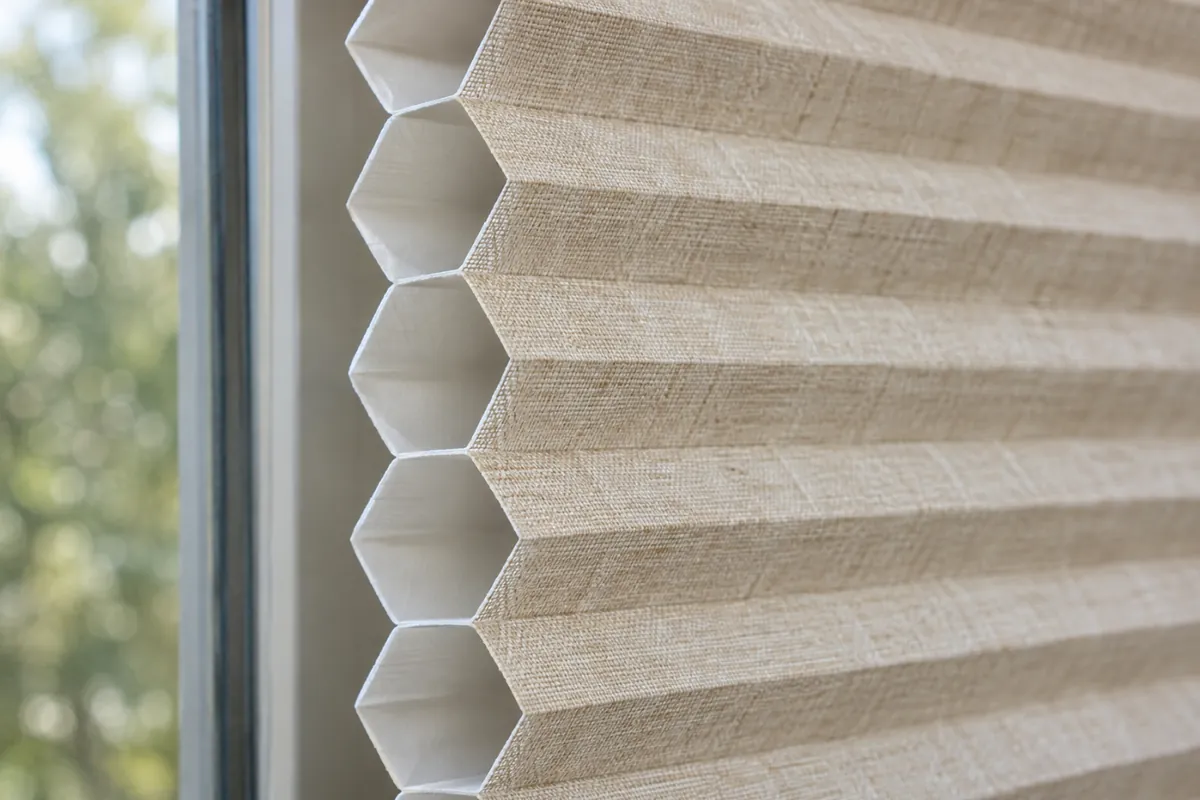
A cellular shade is fabric folded into rows of hollow cells. Each cell holds a pocket of still air, and still air is a decent insulator. Lowered, the shade puts a layer of trapped air between the cold glass and the room.
| Single cell | Double cell | |
|---|---|---|
| Layers of air pockets | One | Two |
| Insulation | Good | Better |
| Look | Slimmer stack when raised | Fuller stack when raised |
| Best for | Most rooms | North-facing and drafty windows |
Layers of air pockets
- Single cell
- One
- Double cell
- Two
Insulation
- Single cell
- Good
- Double cell
- Better
Look
- Single cell
- Slimmer stack when raised
- Double cell
- Fuller stack when raised
Best for
- Single cell
- Most rooms
- Double cell
- North-facing and drafty windows
What the Research Says
- Heat loss: The Department of Energy says tightly installed cellular shades can reduce heat loss through windows by 40% or more in heating seasons, about 10% heating energy savings.
- Heating energy: A DOE article on Minnesota's decision to count cellular shades as an energy-saving measure cites earlier Oak Ridge National Laboratory studies showing they can cut heating energy needs by almost 25%.
- Summer heat: The same Energy Saver guidance says window attachments also reduce unwanted solar heat gain in warm months.
Savings depend on the home, the windows and how the shades are used. These figures come from DOE sources, not from our own testing.
How to Get the Most From Cellular Shades
Cellular shades save the most heat when they fit tightly, stay lowered on winter nights and use double cells on the coldest windows.
- 1. Measure for a tight fit. Gaps at the sides and bottom let air move past the shade.
- 2. Choose double cell for the coldest rooms, usually north-facing ones.
- 3. Lower them at night in winter, when heat loss is highest.
- 4. Raise them on sunny winter days to let the sun warm the room.
- 5. Fix obvious air leaks at the window frame with weatherstripping. A shade can't stop air coming through a gap in the frame.
When Cellular Shades Aren't the Best Fit
Cellular shades are not the best fit for very steamy bathrooms without a fan, patio doors used all day, or rooms where the daytime view matters most.
- Very steamy bathrooms without a fan, where faux wood blinds hold up better.
- Patio doors used all day, where a sliding product is easier.
- Rooms where the view matters most by day, where a solar roller shade keeps it.
Asked often
Cellular Shade Energy Questions
Do cellular shades really save energy?
The Department of Energy says tightly installed cellular shades can reduce heat loss through windows by 40% or more in heating seasons, which it equates to about 10% heating savings.
Single or double cell for a Chicago winter?
Double cell insulates better and is worth it on north-facing and drafty windows. Single cell is fine for most other rooms.
Do blinds insulate as well as cellular shades?
No. Air moves through the gaps between slats. A cellular shade is one continuous layer with trapped air.
Should I keep cellular shades down all winter?
Lower them at night and on cloudy days. Raise them on sunny days to let the sun warm the room.
Do they help in summer too?
Yes. Lowered on sunny windows, they reduce unwanted heat coming in.
Sources
- U.S. Department of Energy, Energy Saver: Energy Efficient Window Coverings
- U.S. Department of Energy, Minnesota Becomes First State to Include Cellular Window Shades in List of Effective Techniques for Saving Energy